Recording Engineer School

  • Enroll Now!
    • What do I need for my home studio?
    • Why is your school so cheap? I’m skeptical!
    • Which microphone should I buy?
    • Do I need any equipment to take your course?
    • I don’t like the sound of my vocal
    • Why are my mixes thin and not as loud as commercial CDs?
    • I’m a beginner. Do I need any knowledge of electronics?
    • I have had some experience. Can AIA still help me?
    • How do I form my own record label?
    • Which software and which DAW is best?
    • What equipment do I need for a commercial studio?
    • How do I take the tests?
    • What’s the difference between a demo and a master?
    • What is mastering?
    • Will your course teach live sound engineering?
    • Do I need to soundproof my recording room?
    • What is the difference between a compressor and a limiter?
    • If you could choose only one compressor or limiter – which would it be?
    • How do I set a compressor?
    • What is an Equalizer?
    • Why do my drums and bass sound weak?
    • Should I monitor on headphone or speakers?
    • Is distortion okay?
    • Can I get a job in the industry?
    • How can I get my music played on radio?
RSS

Pages

  • What do I need for my home studio?
  • Why is your school so cheap? I’m skeptical!
  • Which microphone should I buy?
  • Do I need any equipment to take your course?
  • I don’t like the sound of my vocal
  • Why are my mixes thin and not as loud as commercial CDs?
  • I’m a beginner. Do I need any knowledge of electronics?
  • I have had some experience. Can AIA still help me?
  • How do I form my own record label?
  • Which software and which DAW is best?
  • What equipment do I need for a commercial studio?
  • How do I take the tests?
  • What’s the difference between a demo and a master?
  • What is mastering?
  • Will your course teach live sound engineering?
  • Do I need to soundproof my recording room?
  • What is the difference between a compressor and a limiter?
  • If you could choose only one compressor or limiter – which would it be?
  • How do I set a compressor?
  • What is an Equalizer?
  • Why do my drums and bass sound weak?
  • Should I monitor on headphone or speakers?
  • Is distortion okay?
  • Can I get a job in the industry?
  • How can I get my music played on radio?

Recent Comments

  • Betty on Do I need to soundproof my recording room?
  • Stephania on Do I need to soundproof my recording room?
  • admin on Do I need to soundproof my recording room?
  • Gladys on Do I need to soundproof my recording room?
  • peter on Will your course teach live sound engineering?

School info

Audio Instititute

11. “What equipment do I need for a commercial studio?”

by admin on January 4, 2011 at 3:46 pm
Posted In: Questions

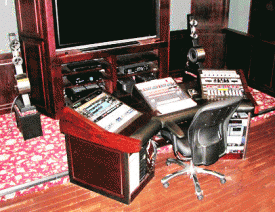
Yamaha DAW

Let’s look at some different scenarios:

If you will be recording masters for local bands then you will need at least a mid-sized DAW (Digital Audio Workstation) which has about a dozen input channels.

Plus about ten microphones of various kinds along with mic stands and headphones for all the musicians.

You will require a much larger space than if the studio were just for yourself. So where will the studio be located? Live drums are very loud.

Equipment breaks down. Consider technical support. Is it readily available in your neighborhood or country? If not, then stay away from older or used equipment.

A maintenance engineer may be difficult to locate which could result in a loss of income when your studio malfunctions. Many clients in this business are not famous for their patience or even loyalty. The show must go on!

If you intend allowing other engineers to run sessions in your studio then your set-up and interfacing should adhere to industry protocol. Otherwise, they will have difficulty operating it and frequently interrupt your siesta to ask “Where are the inputs to the restrooms?”

If you will be recording music for videos and motion pictures and/or advertising jingles for radio or television, a digital audio workstation is the preferred choice of professionals in this business.

Producers and advertising agency people are renowned for changing their minds at the eleventh hour, so revisions and edits on a DAW can be made very quickly without having to resort to re-recording the whole piece from scratch.

Spoken word recording is becoming big deal to the cute Kindle and its family of book-reading gizmos. This requires a far simpler set-up. A much smaller mixer, less tracks on the recorder, minimal processing equipment, but a pair of really good condenser microphones.

Plus an extremely quiet recording booth or room with little or no sound reflection.

If you have high ambitions and want to record all of the above, plus superstars, now we’re talking big bucks. A world class state-of-the-art recording studio can cost upwards of a $250,000. Some companies have invested over $10 million in their facility.

Simply stated, they contain everything from 96 channel recording consoles to 48 track recording machines and a couple of hundred microphones, not to mention jacuzzis, pool tables, pinball machines and a private golf course in the grounds.

You would be wise to use the services of a professional studio designer and audio consultant before embarking upon such a venture.

An enterprise such as this needs to comply with a maze of laws, building codes, taxes and bureaucratic red tape. Are you prepared to deal with that?

Then there’s the business of live sound. Do you intend taking your equipment on the road to record live performances in clubs etc? If so, you’ll need a truck and transportation containers plus excessive lengths of cabling to meet the demands of different sized stages.

And let us repeat this all-important question . . . what is your anticipated financial budget? You must make a list for all equipment plus studio construction and add up the anticipated sum.

Now double it! That’s right — DOUBLE IT! Your projections will assuredly be wrong. Possibly very wrong. Do you still really want to build a studio?

We have talked about the requirements for various applications and environments. Once you decide which avenue you intend to pursue, make sure all your equipment is of virtually identical quality within that level. One weak link in the chain will destroy the higher quality that all the other pieces give. (27 more pages in the course)

 Comment 

12. “How do I take the tests?”

by admin on January 4, 2011 at 3:45 pm
Posted In: Questions

We’ve made our testing real easy and fun. You simply go online and take them whenever you’re ready.

You can take as long as you need – there are no time limits, and there certainly is no charge. Never has been and never will be!

As soon as you have taken a test (there are 5 altogether) you will be able to see your results and the total number of points you have scored.

If your instructor feels that you need a little more personal attention on any particular subject, he will send such explanations to you on a one-to-one basis.

After you have completed your final test, your gold-seal Audio Institute of America Diploma will be personally dated and signed by Peter Miller himself and promptly mailed to your home address.

And after you have graduated, you will be encouraged to keep in touch with AIA throughout your music career, whether it becomes a hobby or on a professional level.

 Comment 

13. “What’s the difference between a demo and a master?”

by admin on January 4, 2011 at 3:43 pm
Posted In: Questions

Think of the demo as a blueprint or a prototype for a masterpiece.

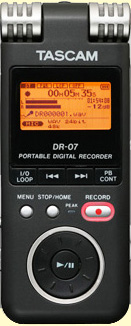
Mini recorder

Demo recordings were originally conceived to sell the song – not the recording artistry. In the old days a demo was quickly made by a songwriter or publisher to sell a song or an artist or record label.

If the song was good enough, the recording quality was irrelevant. Furthermore, the songwriter could focus on the song itself rather than the sound production.

The demo doesn’t have to sound as polished or professional as the master. As long as the vocal is understandable and the singer is singing pretty much in tune, these are the important features.

K.I.S.S. = keep it simple stupid!

Keep a demo simple but effective. Don’t use too many effects and don’t belabor the individual sounds.

Sometimes it happens that that “great sound” you got on the demo can’t be duplicated on the master no matter how much you try to copy all the original settings. That magic dust has just disappeared.

A demo is also the way in which a songwriter can experiment with different ideas until the “right way” is found. For example changing the song structure, switching verses with bridges, trying different keys, different speeds, different attitudes.

When finally a result is obtained that seems to be the perfect best, then – and only then, should the recording of the actual master begin.

Songwriters also need to get their ideas and notions down into a recorded format as soon as the inspiration strikes or it may be lost and gone forever. A simple on/off recording cassette recorder is by far the quickest way to do this.

You don’t need to go switching on equipment, plugging in mics and opening recording programs or the inspiration will dissolve into a sea mist and wisp away.

4-track recorder

Just make a rough-and-ready recording as soon as you possibly can – any way you can. Capturing that illusive moment is essential. Then take your time to work on it and perfect it later.

Songwriters have been known to telephone themselves and sing an idea into their own answering machines.

A master however, needs to be a complete recording of far higher quality – not only in performance and musicianship, but also in sound. It always takes much longer to produce and should have the production values that would be something the fans would want to buy.

Nowadays it’s actually possible to make recordings in your home-studio that equal or even surpass the quality of masters made in professional state-of-the-art studios.

However, if you are promoting yourself to a record label, you should definitely not submit anything less than your absolute best performance. This is where demos are not allowed. Remember this – you don’t get a second chance with most companies.

The industry now expects master-quality demos if you’re shopping for a record deal. (One complete lesson on this in the course).

 Comment 

14. “What is mastering?”

by admin on January 4, 2011 at 3:43 pm
Posted In: Questions

When you have finished mixing all the songs for your album you may think that it is now ready to be presented to your eagerly-awaiting public. Not so! There is one more all-important stage your tracks must go through.
Commercial recordings are almost always “mastered” after the final mixes have been completed. This is usually done by a “mastering engineer” in a “mastering room.”

Mastering room

It can however also be done by the people at the manufacturing plant where you plan to get your CD copies produced.

One way or another, your “final mixes” should be “mastered” by a professional. They will sound even better.

A mastering room is a bit like a recording studio with a specialized selection of extremely high quality equipment.

One of the functions of this mastering stage is to increase the loudness of the overall recordings. This is done using a delicate combination of compressors, limiters and equalizers.

Mastering software

This ensures that all your songs are the same volume and all have the same tonal quality so that they blend well as a cohesive sounding album. The engineer also determines the varying lengths of silence in between each track.

Experience really matters here. All of these processes could easily mess up your mixes. That’s why it’s important to use a great mastering engineer who has had lots of experience in different styles of music. Age really counts here. A youngster will not have had enough experience.

It is a stage which can cost a few hundred dollars but everyone who has ever had it done all agree that it’s money well spent.

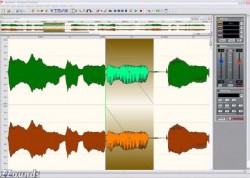
If you can’t afford to go this extra step, home-studio mastering software is available but you really have to do your homework to make it work properly. Lots of trial-and-error.

Sound waveform for editing

The mysterious mastering stage is completely explained in great detail in our course because we know some of our graduates go on to become professional mastering engineers.

And by the way, when you are shopping for a place to get your CDs manufactured, check the small print in the companies ads — CD replication is better than CD duplication. (Much more in the course).

 Comment 

15. “Will your course teach live sound engineering?”

by admin on January 4, 2011 at 3:41 pm
Posted In: Questions

Live concert sound

Almost all of our course is applicable to live sound reinforcement. Sound is sound – and whether you are mixing to a PA system or to a recording device, all the basic essentials of audio are the same. Most of the equipment in live sound is similar to that used in the recording studio.

And don’t forget this — many artists these days request their live performances to be recorded as it happens. There is absolutely no room for error here – only one chance to get it right and there’s no chance for a re-take!

AIA has had many students who have gone on to successful careers in live sound. Some have gone on the road with famous touring bands, some have found work in their local night clubs and some have operated the mixing desk in houses of worship. There are many other avenues to pursue in live sound.

Sound for houses of worship

However, talking about the equipment, there are a few obvious differences. Many mics that work well in the studio are not good for live use. Especially condenser mics which pick up sound from afar.

Dynamic mics are mostly favored in live sound and they are more likely to be rough handled and less susceptible to howling feedback. Feedback is not a concern in the studio. However wind noise for outdoor work can be a major problem and condensers are particularly sensitive to air movement.

Live sound engineers are used to working at a much faster pace than studio sessions usually progress.

Reliable equipment that can be trusted is more important than delicate handle-me-with-care pieces. Designer mic pre-amps aren’t necessary because their sound is not so critically judged as it is in the recording studio.

Similarly stage mixers are less transparent than studio desks.

Digital Audio Workstations can be used for live work but it is much more practical to use a purpose-designed mixing console where you can immediately grasp a control knob in an emergency.

Tourbus

Most equipment is the same in recording and live sound. Compressors and equalizers are the same as are noise gates reverberation units and other processors.

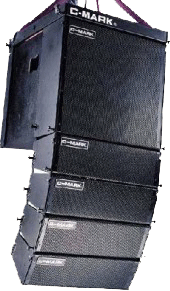
The main difference in the two fields lies in the amplification of the sound. The size of the loudspeakers and the quantity and size of the power amplifiers are vastly different. This is the area where your studio training falls a little short but there are various books and websites that we will highly recommend if your ambition is to have an exciting career in live sound engineering.

Loudspeaker array for live sound

Any sound engineer should be able to make the transfer from recording to live sound quite easily. There are so many similarities in the equipment and the techniques are practically the same.

In our course we investigate the acoustics of speaker enclosures, monitor amplifiers, cross-over systems and the analysis and correction of room sound.

No front-of-house engineer can successfully mix live sound unless he or she understands the principles of loudspeakers and monitoring. (There are many more pages and a complete lesson on this in the course).

 Comment 
  • Page 3 of 5
  • «
  • 1
  • 2
  • 3
  • 4
  • 5
  • »

Subscription

Fill out the form below to signup to our blog newsletter and we'll drop you a line when new articles come up.

Our strict privacy policy keeps your email address 100% safe & secure.

AIA link

Audio Instititute

Control Panel

  • Register
  • Recover password

©2011 Recording Engineer School | Powered by WordPress with Easel | Subscribe: RSS | Back to Top ↑